How Long Do Dental Implants Last? (Honest Answer)
Here’s the honest answer: the titanium post — the part fused into your jawbone — can last decades, and often the rest of your life. The crown on top of it is a wear item, like tires on a car, and will likely need replacement every 10–15 years. Anyone who tells you the whole implant is “permanent, no maintenance needed” is selling you something. The research is genuinely encouraging, but longevity is a partnership between the implant, your habits, and your dentist.
Key takeaways
- A 10-year study of 511 implants found a 98.8% survival rate — the titanium post is remarkably durable.
- The crown (the visible tooth) is the wear item: plan on replacement roughly every 10–15 years.
- Smoking is the biggest controllable risk: one long-term study found smokers had a 2.6× higher risk of peri-implantitis and significantly higher implant loss in the upper jaw.
- Gum disease history raises your risk too — the same bacteria that destroyed natural teeth can attack implants.
- Maintenance is unglamorous but decisive: daily cleaning, no smoking, and professional checkups with implant-specific monitoring.
The two-part answer
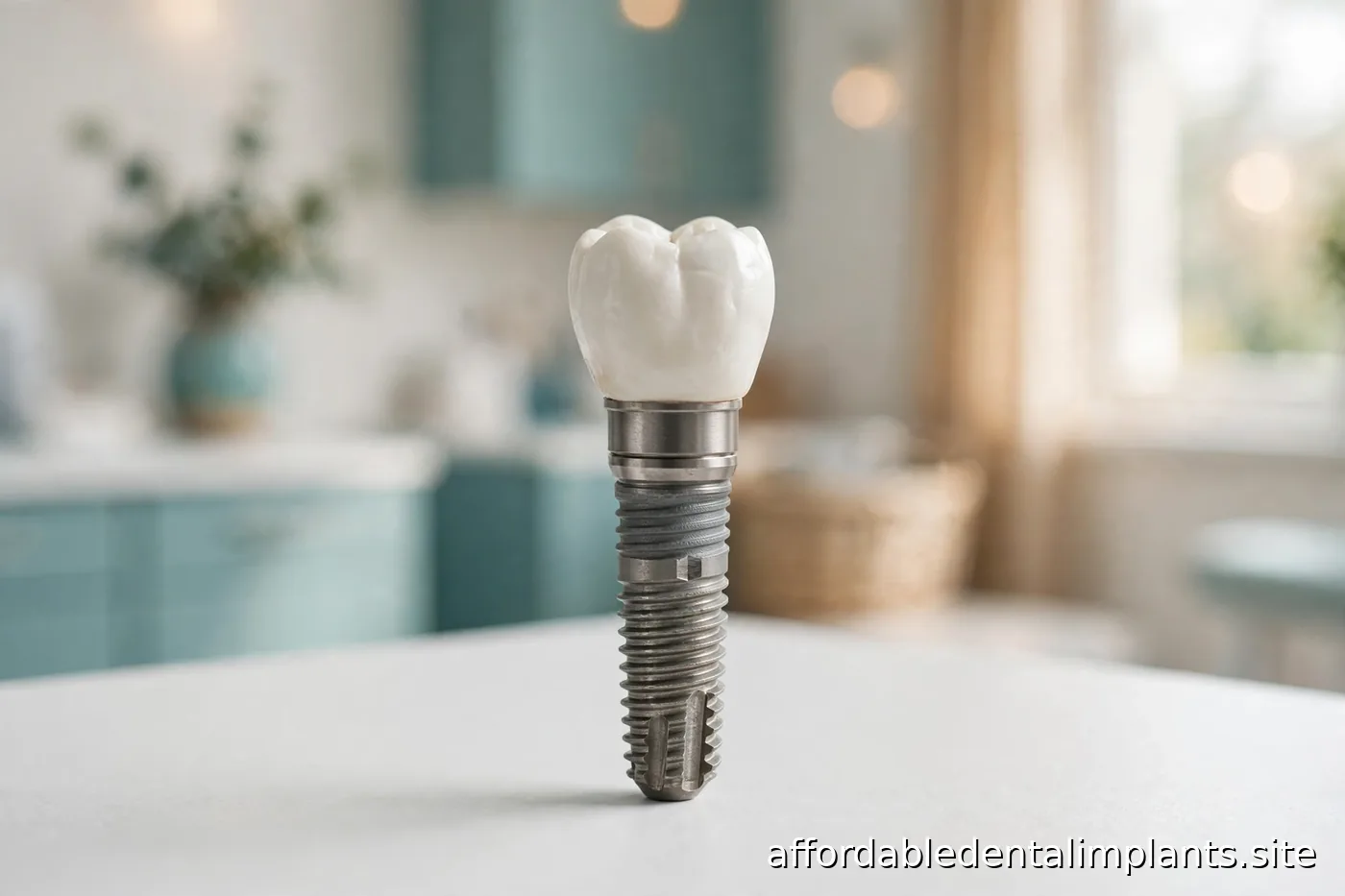
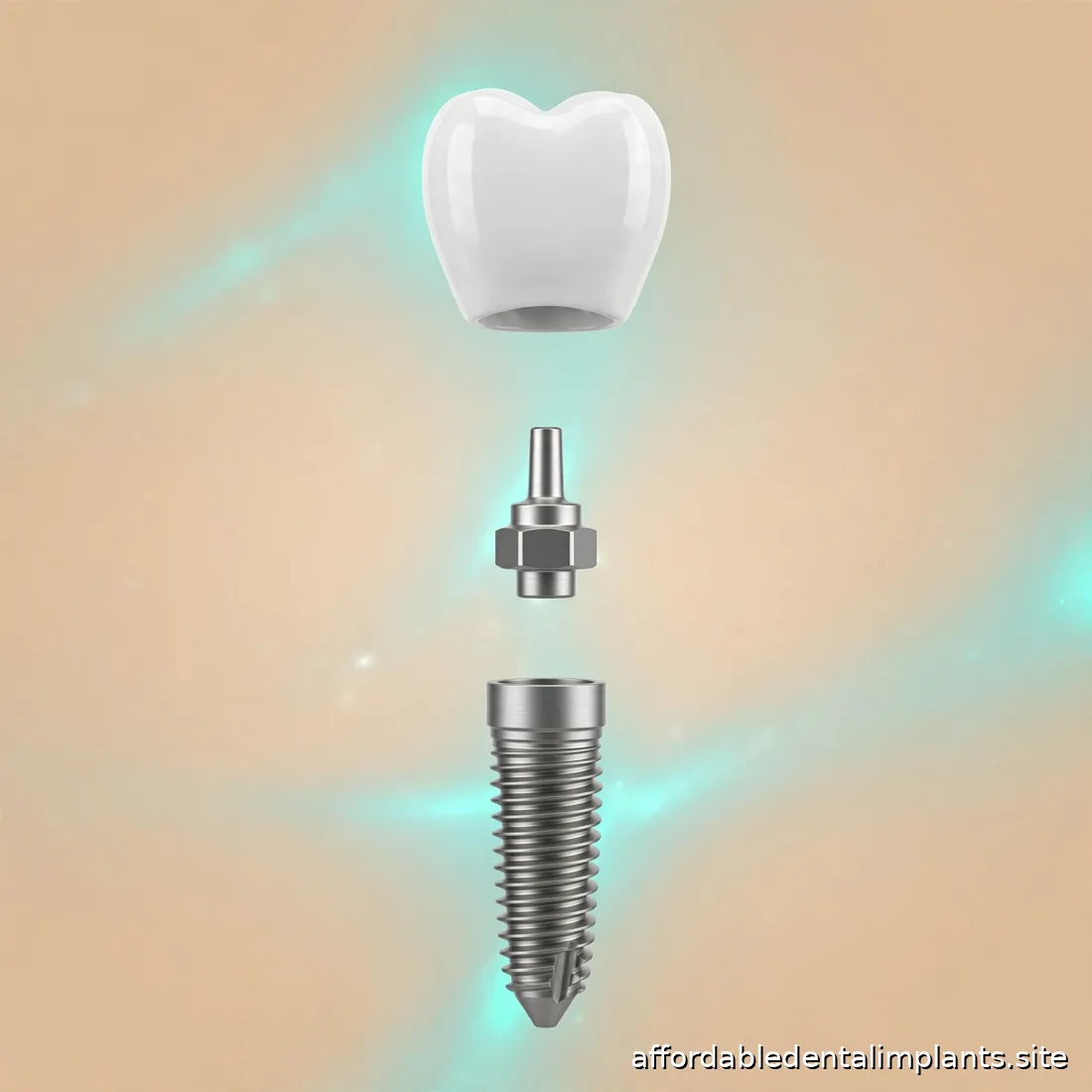
A dental implant isn’t one thing — it’s three: the titanium post (fixture) that fuses with your jawbone, the abutment (connector), and the crown (the visible tooth). This distinction is everything, because each part ages differently.
The post becomes part of your jaw through osseointegration — bone literally grows against and bonds to the titanium surface. Once that bond is solid, the post has no moving parts, nothing to decay, and nothing to wear out from chewing. That’s why “the implant can last a lifetime” is a defensible statement about the post.
The crown lives in the war zone: biting forces, temperature swings, grinding, staining. Porcelain chips. Cement loosens. Bite patterns shift over the years. Expect to repair or replace the crown at least once — budgeting for that now is the difference between a planned $1,000–$2,000 maintenance event and a nasty surprise. (Exact crown fees vary by market and material; ask your dentist what a replacement crown runs in their practice.)
So when someone asks “how long do dental implants last,” the accurate answer is: the foundation, decades; the visible tooth, roughly a decade or more with care. Anyone quoting a single number for the whole system is oversimplifying.
What the long-term studies show
Implant dentistry has one of the better evidence bases in dentistry, with multiple studies tracking patients for a decade or more. A few landmarks worth knowing:
- Buser et al. (University of Bern): 303 patients, 511 implants, 10-year follow-up. Survival rate 98.8%, success rate 97.0%, with low rates of peri-implantitis (1.8%) in this orally healthy cohort. (PubMed 22897683)
- Systematic reviews of implant-supported restorations report roughly 95–96% survival at 5 years and 93–95% at 10 years across many studies and implant systems — slightly lower than the best single-center results, which is expected when you average across all skill levels and patient populations.
- Smoking studies consistently show the gap between best-case and real-world: a 10-year prospective study of 453 implants found overall survival of 92.7%, with smokers losing significantly more bone and facing higher failure rates, especially in the upper jaw. (Windael et al., J. Clinical Medicine 2020)
Read these numbers the way a skeptic should: they’re strong, but they come with selection effects. Study patients tend to be healthier, more compliant with maintenance, and treated by experienced clinicians. Your results depend on your mouth, your habits, and your dentist — which is exactly what the rest of this article is about.
Component by component: what lasts and what wears
The titanium post: decades. Once osseointegrated, the post itself essentially doesn’t wear out. Failures of the post are usually biological (infection, bone loss) rather than mechanical — the titanium doesn’t get “used up.” A well-placed post in a healthy, maintained mouth has a realistic horizon measured in decades.
The abutment and screw: long-lived, occasionally fussy. The small screw connecting the parts can loosen over years of chewing cycles — one of the more common minor complications. It’s usually a quick fix at a checkup (tighten or replace the screw), not a catastrophe. Abutment fracture is uncommon.
The crown: 10–15 years is the planning figure. Porcelain-fused-to-metal crowns typically last 10–15 years; modern zirconia and all-ceramic crowns run 10–20 years, with the porcelain layer subject to chipping over time. Grinding, clenching, and chewing hard objects (ice, pens, fingernails) shorten this. Think of crown replacement the way you think of replacing a roof — expected maintenance on a long-lived structure, not a failure of the structure.
Full-arch prostheses (All-on-4 style): the same logic applies at bigger scale. The implants underneath can last decades; the acrylic or zirconia arch on top will need maintenance, relines, or eventual replacement. When comparing implants vs. dentures or implants vs. bridges on longevity, remember to compare total lifetime cost — a bridge that needs replacing every 10 years can cost more over 30 years than one implant.
What shortens an implant’s life
Implants don’t fail randomly. The risk factors are well documented, and most are at least partly in your control.
Smoking. The single biggest modifiable risk. The Windael 10-year study found smokers had a 2.6× higher risk of peri-implantitis than non-smokers, significantly more bone loss, and — in the upper jaw — a 5.64× higher hazard of implant loss compared to non-smokers. Smoking impairs healing, reduces blood flow to the gums, and alters bone structure around implants. If you smoke, quitting before implant surgery is the highest-value thing you can do for the outcome. Many surgeons require it.
History of gum disease. The bacteria behind periodontitis don’t retire when the tooth is extracted. Patients with a history of periodontal disease face higher peri-implantitis rates — the implant version of gum disease, where inflammation and progressive bone loss threaten the implant. If you’ve lost teeth to gum disease, expect your dentist to want the disease fully treated and stable before placing implants, plus a tighter maintenance schedule afterward.
Poor oral hygiene. Implants can’t get cavities, but the gums around them can absolutely get infected. Peri-implant mucositis (gum inflammation without bone loss) is common and reversible; left alone, it can progress to peri-implantitis (with bone loss), which is much harder to treat. Daily cleaning around the implant isn’t optional.
Teeth grinding (bruxism). Implants don’t have the shock-absorbing ligament that natural teeth do, so grinding forces transmit directly to the bone and the crown. Grinders aren’t disqualified, but they usually need a night guard and sometimes a design adjusted for the load. If you wake with jaw soreness or your dentist mentions wear facets, say so before implant planning.
Uncontrolled diabetes and certain medications. Poorly controlled blood sugar impairs healing and raises infection risk. Certain bone medications (like bisphosphonates) require careful assessment. None of these automatically rule out implants, but they belong in an honest conversation with your dentist — bring your full medication list to the consultation.

The maintenance routine that protects your investment
Nobody buys a car and skips oil changes for a decade. Implants work the same way. The routine:
- Daily cleaning, done right. Brush twice daily and clean around the implant specifically — interdental brushes or water flossers reach where regular floss struggles around the abutment contours. Your hygienist can show you the technique for your specific implant; ask at the first cleaning after placement.
- Professional maintenance 2–4 times a year. Implant patients often need more frequent hygiene visits than the standard twice-yearly, especially with a gum-disease history. These visits aren’t just cleanings — the team checks probing depths around the implant, watches for bleeding (an early warning sign), and takes periodic X-rays to monitor bone levels.
- Don’t smoke. Worth repeating because it’s the highest-leverage item on this list.
- Wear the night guard if prescribed. A $300–$600 guard protects a multi-thousand-dollar implant. The math is easy.
- Report symptoms early. Bleeding when you clean around the implant, swelling, a bad taste, or a crown that feels loose or “high” when you bite — these are early warnings, not things to watch for six months. Peri-implant problems caught early are treatable; caught late, they cost implants.
One underappreciated point: keep your implant records. Know the implant brand, model, and size — ask your surgeon for the details in writing. Ten years from now, if you move or switch dentists, having the exact system identified makes maintenance and repairs dramatically simpler. Components aren’t universal across brands.
For the full picture of what happens at each stage, from planning through long-term checkups, see our guide to the dental implant procedure steps.
This is general information, not medical advice — individual outcomes depend on your health, habits, and clinical situation. Talk to your dentist about your specific risk factors.
FAQs
Do dental implants last forever?
The titanium post can last the rest of your life in a healthy, maintained mouth — but “forever” with no maintenance is a myth. The crown will need replacement, and the surrounding gums and bone need lifelong monitoring. Think “decades with care,” not “permanent and forgettable.”
What is the most common reason implants fail?
Early failures (in the first year) are usually about healing — failed osseointegration, often linked to smoking, infection, or surgical factors. Late failures are usually biological: peri-implantitis, the progressive bone loss around an implant, driven by bacteria plus risk factors like smoking and poor hygiene.
Can peri-implantitis be treated?
Early stages, yes — professional deep cleaning around the implant and improved home care can reverse mucositis and stabilize early peri-implantitis. Advanced cases with significant bone loss may need surgical treatment, and some implants can’t be saved. This is why bleeding around an implant should never be ignored.
At 70, is it worth getting an implant? Will it outlast me?
Age alone doesn’t disqualify anyone, and the data on older patients is reassuring. What matters is bone health, general health, and your ability to maintain the implant. Many patients in their 70s get decades of function from implants. Frame it as quality-of-life years, not calendar years.
Does the implant brand matter for longevity?
System and surgeon matter more than brand marketing. Well-documented implant systems with long track records make future maintenance easier (parts availability, known protocols). Be wary of deep-discount quotes using obscure systems — saving $500 now can cost you far more if components become unobtainable.
Sources: 10-year survival data — Buser et al., Clin Implant Dent Relat Res 2012 (PubMed 22897683); smoking and long-term outcomes — Windael et al., J Clin Med 2020; crown lifespan ranges — Kintek restoration lifespan guide.
Your next step: if you’re considering implants, ask your dentist two longevity questions at the consultation: (1) “Given my gum history and habits, what’s my personal risk profile?” and (2) “What does your maintenance program for implant patients look like — how often, and what does it cost?” The answers tell you whether you’re buying a one-time procedure or entering a well-managed long-term plan. You want the second one.