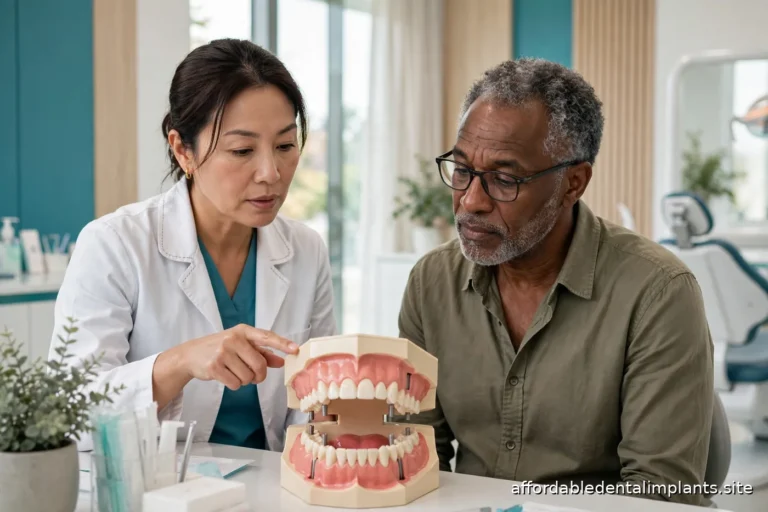
Bone Grafts and Sinus Lifts: The Hidden Implant Costs
The quote said $4,500. The final bill says $7,000. Somewhere between the consultation and the treatment plan, a bone graft appeared — or a sinus lift — and neither was in the headline price. These are the most common budget ambushes in implant dentistry: procedures you may genuinely need, that are often priced separately, and that add both money and months to your timeline. Here’s what they are, when they’re actually necessary, and what they should cost.
Key takeaways
- A bone graft rebuilds jawbone volume so an implant has something solid to fuse with; a sinus lift is a specialized graft for the upper back jaw where the sinus sits too close.
- Typical U.S. cost bands: bone grafts $300–$3,000, sinus lifts $1,500–$5,000, depending on type, extent, and material.
- Grafting adds 3–6 months of healing; sinus lifts commonly add 4–12 months before implant placement.
- Not everyone needs grafting — a 3D scan (CBCT) determines whether your bone is sufficient.
- Ask whether your quote bundles grafting or prices it separately; that one question prevents most billing surprises.

The direct answer
A bone graft adds bone material to a jaw that’s too thin or too soft to hold an implant; a sinus lift does the same thing specifically in the upper back jaw, where the sinus cavity leaves too little bone height. You need one when your 3D scan shows insufficient bone — commonly after teeth have been missing for years, after gum disease, or in the upper molars where anatomy runs tight. Expect grafting to add roughly $300–$3,000 and a sinus lift $1,500–$5,000 to your implant bill, plus several months of healing. They aren’t upsells in most cases — they’re the foundation the implant stands on — but they should be itemized, explained, and priced before you commit.
When is grafting actually needed?
Bone follows a simple rule: use it or lose it. The roots of your teeth stimulate the jawbone every time you chew. When a tooth goes missing, that stimulation stops, and the bone in that spot begins to shrink — a process called resorption. Lose a tooth and wait five years, and a meaningful amount of bone volume can be gone.
That gives you the four most common situations where grafting enters the conversation:
- The tooth has been missing for a long time. The longer the gap, the more bone has resorbed, and the more likely a graft is needed to rebuild the site.
- Gum disease destroyed bone. Periodontitis eats away at the bone supporting teeth. Even after the disease is treated, the lost volume may need rebuilding before an implant can go in.
- The upper back jaw. The maxillary sinuses sit right above the upper molars. When those teeth are lost, the sinus can expand downward while the bone shrinks upward, leaving a paper-thin layer of bone. This is sinus-lift territory.
- Trauma or extraction damage. An injury, a difficult extraction, or a cyst can leave a defect that needs filling before an implant has a stable home.
The deciding factor is always the 3D cone-beam scan (CBCT). Your dentist or oral surgeon measures the actual bone height and width at the implant site. If there’s enough solid bone to fully surround and support the implant, no graft is needed — and you should feel free to ask exactly that question: “What did the scan show, and why isn’t the existing bone enough?” A legitimate graft recommendation always traces back to a specific measurement.
One more nuance: sometimes grafting happens at the time of extraction — called socket preservation — to prevent bone loss before it starts. If you’re having a tooth pulled and already considering an implant, ask about this. Preserving bone now is usually cheaper and faster than rebuilding it later.
Bone graft types and cost bands
Not all grafts are equal. The material and the extent of the work drive the price more than anything else. The four material categories:
- Autograft — bone taken from your own body, usually the chin or jaw (sometimes the hip for large grafts). Highest biological compatibility, but it means a second surgical site and more discomfort. Typically the priciest option.
- Allograft — processed bone from a human tissue donor, sterilized and regulated. The most common choice for routine dental grafting: no second surgery, well-studied, moderate cost.
- Xenograft — usually bovine (cow) bone, processed to be safe and biocompatible. Works well as a scaffold that your own bone grows into. Mid-range cost.
- Synthetic (alloplastic) — man-made materials engineered to mimic bone structure. Often the most affordable option, and no biological sourcing concerns.
And the procedure types, from smallest to largest:
- Socket preservation — graft placed right after an extraction to hold the bone’s shape. The simplest and cheapest: typically $200–$800.
- Ridge augmentation — rebuilding the width or height of the jaw ridge where bone has shrunk. Moderate complexity: typically $500–$2,500 depending on extent.
- Block graft — a solid piece of bone secured where a large defect exists. More involved: typically $1,000–$3,000.
- Sinus lift with grafting — covered below: typically $1,500–$5,000.
These bands reflect published U.S. cost guides; your quote depends on your market, your surgeon’s fees, and the material used. The single most important cost variable is how much bone is being rebuilt — a small socket fill and a full ridge rebuild are different procedures wearing the same name. When a quote says “bone graft,” ask which type, how many sites, and what material. Vague answers at this stage become expensive surprises later.
Sinus lifts: the upper-jaw special case
A sinus lift (sinus augmentation) is a bone graft with an address: the upper molars and premolars, where the maxillary sinus sits. The surgeon opens a small window in the bone, gently lifts the sinus membrane upward, and packs graft material into the new space. Over months, your body converts that material into solid bone tall enough to hold an implant.
There are two approaches. The lateral (open) sinus lift is used when bone height is very low — more access, more graft material, higher cost. The crestal (closed) lift is a smaller augmentation done through the implant site itself, sometimes at the same appointment as implant placement — less invasive, lower cost. Which one you need depends on how much bone you’re starting with.
Cost guides put sinus lifts at $1,500–$5,000 in the U.S., with the open technique at the higher end. Success rates are high — sinus lifts are reported to lead to successful implant placement in over 90% of cases, a figure attributed to the American Academy of Periodontology in published guides. Risks exist, as with any surgery: sinus membrane perforation and infection are the main ones, but they’re uncommon with an experienced surgeon. Ask your surgeon how many sinus lifts they perform per year. This is a procedure where volume correlates with smooth outcomes.
How grafting changes your timeline
Here’s the part that catches people off guard even more than the money: grafting stretches the calendar. The graft material needs time to integrate and become living bone before an implant goes in.
- Bone grafts: typically 3–6 months of healing, depending on the graft type and size.
- Sinus lifts: typically 4–12 months before implant placement, with larger open lifts at the longer end.
Add the implant’s own healing (osseointegration, roughly 3–6 months) and the crown fabrication, and a case that starts with grafting can run 9–15 months from first surgery to final tooth. Some cases allow combining steps — a small graft placed at the same time as the implant, or a closed sinus lift done during placement — which compresses the timeline. Ask whether your case qualifies for same-day grafting; it doesn’t always, but when it does, it saves months and sometimes money.
Plan your life around the timeline, not the other way around. If you have a wedding, a move, or a stretch without dental coverage coming up, say so at the consultation. A good treatment coordinator will sequence the stages around your reality. For the full stage-by-stage picture, see our walkthrough of the dental implant procedure steps.

The insurance question
Set expectations low. Bone grafting and sinus lifts are frequently excluded from dental plans or covered only at low rates — plans often classify them as not medically necessary for the plan’s purposes, or cover them only when tied to specific covered procedures. When coverage exists, it’s usually partial and still subject to the annual maximum, which the implant itself may already consume.
The practical move is the same one we recommend for implants generally: get a pre-treatment estimate that lists the grafting as its own line item, so you see the exclusion (or the partial benefit) in writing before surgery. Don’t accept “we’ll bill it and see.” And if the grafting pushes the total beyond what you can pay upfront, dental school clinics often perform grafting and implant surgery at significantly reduced fees under specialist supervision — worth a call if your budget is tight.
This is general information, not medical advice — grafting decisions depend on your bone anatomy and health. Talk to your dentist or oral surgeon about your specific situation.
Questions to ask before you agree
Bring this list to the consultation. The quality of the answers tells you as much as the answers themselves.
- What exactly did the 3D scan show? Ask to see the measurement — bone height and width at the implant site — and what minimum the implant needs.
- Which graft type and material are you recommending, and why? There should be a clinical reason, not just a habit.
- Is the grafting bundled in my quote or priced separately? Get the itemized breakdown in writing.
- Can the graft be done at the same time as implant placement? If yes, you save months. If no, ask why not.
- What’s the total timeline, stage by stage? From graft to final crown, with healing windows.
- What happens if I skip the graft? The honest answer is usually “the implant has a higher failure risk” — you want to hear the specific risk for your bone, not a generic warning.
- How many of these procedures do you do per year? For sinus lifts especially, experience matters.
If a second opinion would help you feel confident — it often does with multi-thousand-dollar surgical plans — get one. A reputable surgeon won’t be offended. Our guide to why implant quotes vary so much explains what legitimate price differences look like versus red flags.
FAQs
Can I get an implant without a bone graft if my dentist recommends one?
Technically yes — it’s your mouth — but the recommendation exists for a reason. Implants placed in insufficient bone fail at higher rates, and a failed implant costs far more than a graft (removal, re-grafting, re-placement). If cost is the concern, ask about less expensive graft materials or staged treatment rather than skipping the graft.
Does a bone graft hurt?
Most patients report the recovery feels similar to a tooth extraction — soreness and swelling for a few days, manageable with over-the-counter pain relief and the post-op instructions. The extraction-site grafts are the mildest; block grafts and sinus lifts involve more recovery. Your surgeon should give you a realistic recovery preview for your specific procedure.
Will my body reject the graft material?
True rejection is rare. Allograft and xenograft materials are processed and sterilized specifically to minimize immune response, and synthetics are biocompatible by design. Infection at the surgical site is the more common complication, which is why post-op instructions (no smoking, no straws, keep the area clean) matter so much.
How do I know if a graft quote is fair?
Compare like with like: same graft type, same material, same number of sites. Get the itemized quote in writing from two providers — an oral surgeon and a periodontist, ideally — and check whether imaging, follow-up visits, and the membrane (if used) are included or billed separately.
Sources: Cost bands and healing timelines from dentalcarefree.com’s sinus lift vs. bone graft guide (sinus lifts $1,500–$5,000; bone grafts $300–$3,000; graft healing 3–6 months; sinus lift healing 4–12 months). Confirm pricing with your own provider — costs vary by market and case complexity.
Your next step: at your implant consultation, ask for two numbers — the implant quote with any recommended grafting itemized separately, and the stage-by-stage timeline. If grafting wasn’t mentioned but your teeth have been missing for years, ask why not: either your bone is genuinely sufficient (great — ask to see the scan), or it was left out of the quote to make the price look smaller.