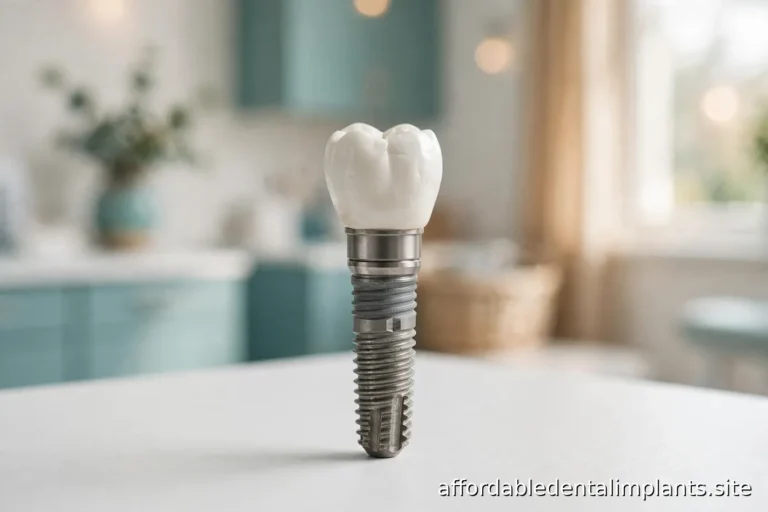
Dental Implant Procedure Step by Step (Timeline)
A standard single dental implant takes 3 to 6 months from consultation to final crown, spread across about 4–6 appointments. The calendar is dominated by one thing: healing. The surgery itself is a single visit; the months in between are your jawbone fusing to the implant (osseointegration). If bone grafting is needed first, add 3–6 months upfront.
Most anxiety about implants comes from not knowing what happens when. This guide maps the full timeline — five phases, every visit, the healing windows, and the things that can stretch the schedule — so there are no surprises.
Key takeaways
- Standard timeline: 3–6 months, 4–6 visits; surgery is one appointment, healing is the rest.
- Osseointegration (bone fusing to the implant) takes 3–6 months and can’t be rushed — it’s the load-bearing step.
- Grafting or sinus work beforehand adds 3–6 months; that’s the most common reason timelines stretch.
- You’ll never be toothless and waiting without a plan — temporaries cover visible gaps during healing.
The 5-Phase Timeline at a Glance
| Phase | What happens | Typical timing | Visits |
|---|---|---|---|
| 1. Evaluation & planning | Exam, 3D scan, treatment plan | Weeks 1–2 | 1–2 |
| 2. Site preparation | Extraction and/or bone graft, if needed | Weeks 2–6 (or +3–6 months if grafting) | 1–2 |
| 3. Implant placement | Surgical placement of the post | Month 1–2 | 1 |
| 4. Osseointegration | Bone fuses to the implant | Months 2–6 | 1–2 check-ups |
| 5. Restoration | Abutment + final crown | Months 4–7 | 2–3 |
Total for a straightforward case: roughly 4–7 months from first consult to final crown. With grafting: 7–12 months. These are calendar months, not months of active treatment — most of the time you’re simply living your life while biology does its work.
For the cost side of each phase — what you’re paying for and when — see our dental implant cost guide.
What Each Visit Actually Involves
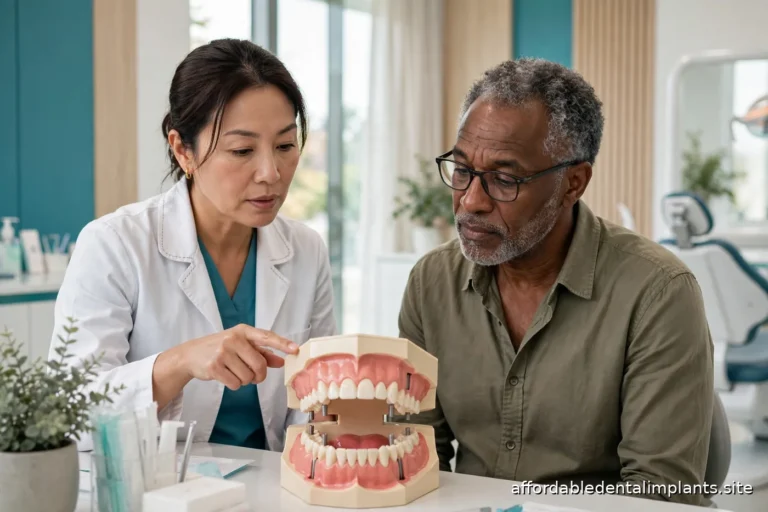
Visit 1 — Consultation (45–60 minutes). The dentist examines your mouth, reviews your medical history and medications, and discusses whether an implant suits your situation. Expect questions about smoking, diabetes, and medications affecting bone healing — these aren’t small talk; they change the plan. You should leave with a written treatment plan and an itemized cost estimate. Many practices apply the consult fee toward treatment.
Visit 2 — 3D imaging and planning (30 minutes, sometimes same day as Visit 1). A CBCT scan builds a three-dimensional map of your bone, nerves, and sinuses. The dentist uses it to choose the implant’s exact position, angle, length, and diameter — and to spot grafting needs before surgery day. This is the visit that prevents most intraoperative surprises.
Visit 3 — Site preparation, if needed (30–90 minutes). If the damaged tooth is still present, it’s extracted — sometimes with immediate implant placement the same day (possible when infection is absent and bone is good), sometimes with a healing wait. If bone volume is insufficient, grafting material is placed and given 3–6 months to integrate before the implant goes in. Socket preservation grafting at extraction time is the common middle path: it protects the bone you’ll need later.
Visit 4 — Implant placement surgery (60–90 minutes for a single implant). Under local anesthesia (plus sedation if you’ve arranged it), the dentist makes a small opening in the gum, prepares the bone channel, threads the titanium post in, and closes the gum over it — or places a healing cap. Most patients report the procedure itself feels less dramatic than expected; it’s precise, quiet work. You’ll leave with aftercare instructions, possibly a prescription, and a follow-up date. Plan soft foods for several days.
Visits 5 (check-ups during healing). Brief appointments — often 15 minutes — to confirm the gum is healing and the implant is stable. These should be included in your quoted price; confirm that when you compare implant quotes.
Visit 6 — Abutment placement (30 minutes). Once osseointegration is confirmed (sometimes verified with a stability measurement), the gum is reopened with a tiny incision and the abutment — the connector post — is attached to the implant. The gum then heals around it for 1–2 weeks, shaping the natural contour the crown will emerge from.
Visits 7–8 — Crown design and delivery. Impressions or a digital scan capture the abutment’s position; the lab crafts your crown (1–3 weeks). At delivery, the dentist checks the fit, bite, and shade match, makes fine adjustments, and cements or screws the crown in place. You’ll bite, grind gently, and speak — if anything feels high or off, say so now; adjustments are routine.
The temporary question. If the implant is in a visible spot, you won’t walk around with a gap for months. Options include a removable flipper, a temporary bonded tooth, or (in select cases) a temporary crown on the implant itself. Temporary solutions typically cost $200–$600 and should be in your treatment plan from the start — ask, don’t assume. (dental-area.com)
Healing Windows: What’s Happening Under the Gum
The timeline’s long middle isn’t waiting — it’s construction. Understanding the biology makes the patience easier:
- Days 1–14: Soft-tissue healing. The gum closes over the site; swelling and soreness peak in the first 2–3 days then fade. This is the only part of healing you can feel, and it’s the shortest.
- Weeks 2–6: Early bone response. Bone cells begin colonizing the implant’s textured surface. The implant is actually at its least stable around weeks 2–4 — a normal, expected dip as old bone remodels before new bone locks in. This is why dentists are conservative about loading implants early.
- Months 2–6: Osseointegration proper. Bone grows into the implant’s microscopic surface texture, gradually fusing into a single load-bearing unit. Lower-jaw bone, being denser, often integrates faster (closer to 3 months); upper-jaw bone, being softer, often needs longer (4–6 months). Your dentist confirms readiness clinically — not by the calendar alone.
- After restoration: The bone keeps remodeling around the implant for a year or more, adapting to chewing loads. This is normal and desirable — it’s the same process that keeps natural teeth anchored.
The key discipline during healing: don’t test it. Chew on the other side, keep the site clean per instructions, show up for check-ups, and let the biology finish. Implants fail most often from disrupted early healing — which is largely in your control.
Long-term, the biology pays off: a 2019 systematic review estimated 10-year implant survival at 96.4% — among the most durable outcomes in dentistry. (PubMed) Our guide on how long dental implants last covers what “survival” means for the post versus the crown.

What Can Delay the Timeline
Most delays are foreseeable — which means they’re plannable. The common ones:
- Bone grafting first (+3–6 months). The single most common timeline extender. If a tooth has been missing for a year or more, bone loss often requires grafting before placement. It’s not a complication; it’s the standard sequence. Our bone graft and sinus lift cost guide details the procedures and prices.
- Sinus lift for upper molars (+4–9 months including healing). When the sinus floor sits too close to the implant site, it’s lifted and grafted first. Adds cost ($1,500–$5,000) and calendar time — but prevents the alternative, which is an implant with nothing to hold onto.
- Extraction-site infection. If the tooth being replaced is actively infected, the dentist will usually clear the infection and let the site settle before placing the implant — sometimes placing immediately with precautions, sometimes waiting weeks. Rushing an implant into infected bone is how failures happen.
- Slow integration. Some patients’ bone simply takes longer — softer upper-jaw bone, certain medications, smoking. Your dentist monitors stability and extends healing rather than loading an unready implant. Waiting an extra month beats replacing a failed implant.
- Smoking. Worth its own line: smoking constricts blood flow and measurably impairs bone healing around implants. Many surgeons ask patients to stop before and during treatment. If you smoke, discuss it openly at the consultation — it changes planning, not just lectures.
- Lab and scheduling logistics. Crown fabrication takes 1–3 weeks; try-in adjustments can add a visit. Around holidays or with complex shade-matching, build in buffer. Mundane, but it’s the most common “delay” of all.
None of these are emergencies — they’re the normal variance of a months-long biological process. A dentist who builds buffer into the timeline is being honest, not slow.
Frequently Asked Questions
Can the whole thing be done faster — “same-day implants”?
Sometimes. Immediate placement (implant at extraction) and immediate loading (temporary crown right away) work in select cases with excellent bone and no infection. But the biology doesn’t negotiate: even “same-day” cases need months before the final crown, and not every mouth qualifies. Be wary of anyone promising every patient a one-visit implant — case selection is the whole game.
Will I be in pain for months?
No. Discomfort concentrates in the first few days after each surgical visit — placement, and grafting if applicable. The months of osseointegration are painless; most patients forget the implant is there. (General information — your dentist will tell you what to expect and how to manage it.)
How do I eat during the months of healing?
Normally, with adjustments: soft foods for the first days after surgery, then chewing on the opposite side while the implant integrates. Temporary teeth cover visible gaps. By the final crown, you eat normally on the implant — that’s the point.
What are the signs something’s wrong during healing?
Prolonged or worsening pain after the first week, swelling that increases after day 3–4, fever, pus, or a bad taste at the site — contact your dentist promptly rather than waiting for the next check-up. Early intervention resolves most issues; waiting rarely helps.
Do I need to take time off work?
Most patients take 1–2 days after placement surgery — the day of, plus one for swelling. Desk work is usually fine within a day or two; physically demanding jobs may warrant a few extra days. Grafting or multi-implant surgery can extend this slightly.
Your next step: At your consultation, ask for the timeline in writing — phases, expected months, and what would extend it. Then compare it against this guide. A plan that matches the biology above is a plan you can trust; one promising full completion in weeks deserves a second opinion.
This is general information, not medical advice — talk to your dentist about your situation.