
Does Dental Insurance Cover Implants?
Most plans cover implants the way a raincoat covers a thunderstorm: technically, yes — practically, only a little. The typical dental plan treats implants as major restorative work, pays about half of its own allowed fee, and caps its yearly contribution at a low annual maximum. On a single $4,500 implant, that usually translates to $1,000–$1,500 from insurance and the rest from you. Here’s how the whole machine works.
Key takeaways
- Most plans that cover implants classify them as major restorative work and reimburse roughly 50% of the plan’s allowed fee — not 50% of your dentist’s bill.
- The annual maximum (often $1,000–$1,500) is the real ceiling: one implant usually eats most or all of it.
- Plans often cover parts of the process (extraction, the crown on the implant) while excluding the implant post itself or limiting it.
- Watch for the missing-tooth clause and 12-month waiting periods before you plan anything.
- Always get a written pre-treatment estimate before committing — it is the only number that matters.
The short answer
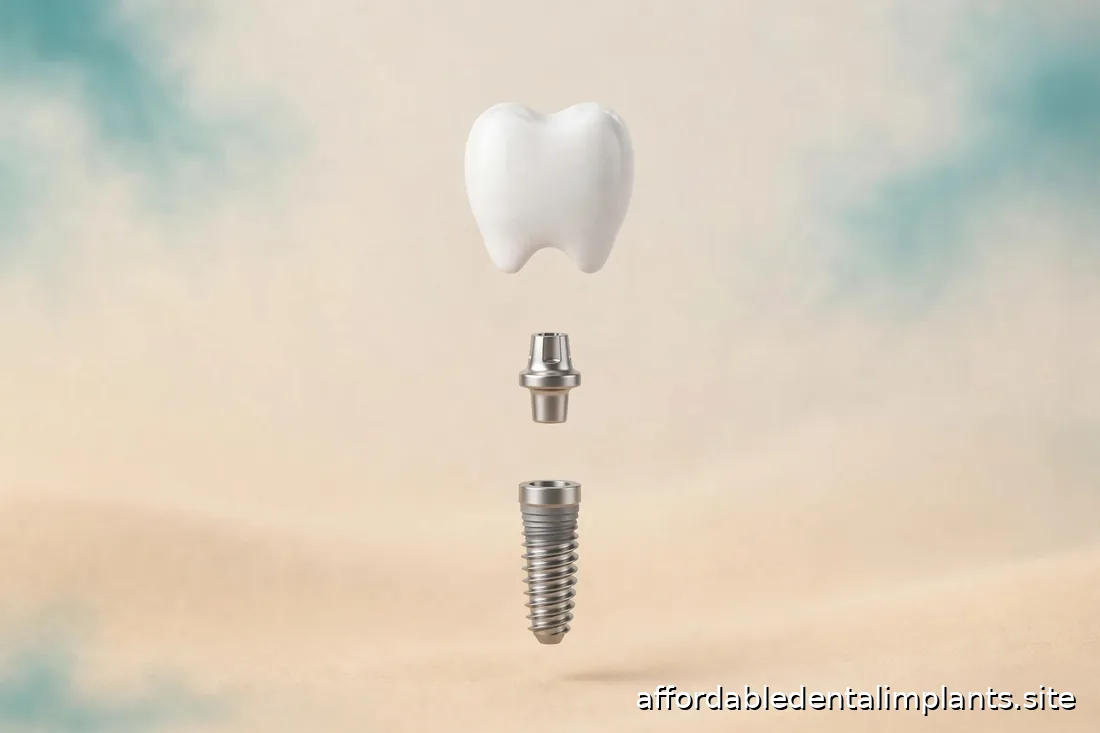
Some dental plans cover implants; many don’t. Among those that do, coverage is partial and heavily structured. Implants are almost never the simple “your insurance pays for this” situation that marketing implies. They are a multi-part procedure — extraction, imaging, bone grafting, the titanium post, the abutment, the crown — and your plan may treat each part differently. The headline: expect insurance to make a dent, not to cover the bill. The details below will help you figure out your real out-of-pocket cost before you’re sitting in the chair with a treatment plan on your lap.
What “covered” actually means
Dental insurance sorts everything into tiers. The standard framework looks like this:
- Preventive — exams, cleanings, routine X-rays. Usually covered at or near 100%.
- Basic — fillings, simple extractions. Usually around 80%.
- Major — root canals, crowns, dentures, and (when covered at all) implants. Usually around 50%.
Implants land in that third tier, and here’s where the marketing confusion starts. You’ve probably heard that insurance won’t pay because implants are “cosmetic.” That’s rarely the real story. Implants are usually classified as major restorative, not cosmetic. The cosmetic angle enters through the back door: some plans simply exclude implants entirely from their list of covered services, and a benefits administrator explaining that exclusion may wave their hands toward “cosmetic or elective.” It isn’t that your insurer thinks your missing molar is a vanity project — it’s that their contract never included implant fixtures in the first place.
What is often covered tells you a lot about how to read your plan. Tooth extraction is basic restorative, so it frequently gets decent coverage. Diagnostic imaging — panoramic X-rays, and sometimes the cone-beam CT scan used for implant planning — often falls under diagnostic benefits at a higher rate. The crown that goes on top of the implant is usually classified as a crown like any other, meaning major-tier coverage may apply to it.
What gets the cold shoulder: the implant fixture itself (the titanium post) is the most commonly excluded or most tightly limited component. Bone grafting and sinus lifts — the procedures many implant patients need before placement — are frequently excluded as not medically necessary in the plan’s terms, or covered only at low rates. So a plan can “cover implants” while covering only the crown and the extraction, leaving the surgical half of the bill entirely yours. Always ask what each component gets, not whether “implants are covered.”
The annual maximum: where the math breaks
Even a generous plan runs into the annual maximum — the total dollar amount your plan will pay for all dental work in a benefit year. Many plans set it around $1,000–$1,500, and it hasn’t kept pace with actual dental costs in decades. Once you hit it, everything else that year is 100% yours.
Run the math on a typical single implant:
| Amount | |
|---|---|
| Dentist’s total fee (post + abutment + crown) | $4,500 |
| Plan’s allowed fee for the covered components | $3,000 |
| Plan pays 50% of allowed fee | $1,500 |
| But annual maximum is | $1,500 |
| Insurance pays | $1,500 |
| You pay | $3,000 |
That $3,000 you owe — not the $2,250 that “50% coverage” suggested — is the number that ambushes people. Two things conspired against you: the plan pays a percentage of its own allowed fee, not your dentist’s fee, and the annual maximum chopped the benefit off at the knees anyway.
Three practical consequences:
- One implant often consumes a whole year’s benefit. If you need two implants plus a filling, expect the rest to wait or come out of pocket.
- Multi-year strategy helps. Because implants happen in stages (surgery, healing, crown months later), many patients deliberately schedule the crown in a second benefit year, unlocking a fresh annual maximum. Ask your dentist whether your treatment timeline allows this.
- The calendar matters. A surgery in December with the crown in February can straddle two benefit years. A surgery in January with the crown in March cannot.
If the gap between what insurance pays and what you owe looks unmanageable, you have options beyond insurance — many patients bridge the difference with dedicated dental financing plans or pay the remainder with tax-advantaged HSA or FSA funds.
Two clauses that quietly disqualify you
Two pieces of fine print sink more implant claims than any other. Check both before you do anything else.
The missing-tooth clause. Some plans exclude coverage for replacing a tooth that was already missing before your coverage started. Lost the tooth two years ago, enrolled in the plan last year, now want an implant? The plan can say no entirely — not partial coverage, no coverage for that tooth. Not every plan has this clause, but enough do that you must ask directly: “Does my plan have a missing-tooth clause, and does it apply to tooth number __?”
Waiting periods. Many plans impose a waiting period before major procedures are covered — 12 months is common for implants, and some stretch to 24. Buy a plan in January hoping to get implants in March and you may find the coverage doesn’t kick in until next year. Note the distinction from the pre-existing condition rules: a waiting period delays all major benefits regardless of when the tooth was lost.
Both of these are plan-specific and neither appears on the marketing summary. The benefits booklet — or a call to the number on the back of your insurance card — is the only reliable source.

How to get a pre-treatment estimate
A pre-treatment estimate (also called a predetermination of benefits) is a written statement from your insurer saying what they will pay for a specific treatment plan before the work begins. It is the single most useful document in this entire process, and getting one is free.
Here’s the process:
- Ask your dentist’s office to submit it. Say the words “pre-treatment estimate” or “predetermination.” Most offices do this routinely and know exactly what to send.
- Make sure it covers every component. The estimate should list the extraction, imaging, bone grafting, implant fixture, abutment, and crown separately, each with its procedure code. If the plan excludes the fixture, you want to see that exclusion in writing, not discover it later.
- Get the numbers in writing from the insurer, not just the dental office. The office’s estimate of your insurance is an educated guess. The insurer’s predetermination is the closest thing to a commitment you can get.
- Read the estimate line by line. Check the allowed fee for each line, the percentage applied, what’s excluded, and whether the total bumps into your annual maximum.
- Ask about timing strategy. While you have the office’s attention, ask whether any stage can be scheduled in a different benefit year to use a second annual maximum.
One caution: a predetermination is not a guarantee of payment. Plans reserve the right to deny if the actual procedure differs or if eligibility changes. But it converts “we think your insurance will cover about this much” into a documented, itemized answer you can plan around. Before you sign any financing paperwork, compare the predetermination against your quotes using our guide to comparing dental implant quotes.
What about medical insurance or Medicare?
Medical (health) insurance occasionally contributes, but only in narrow circumstances. If the tooth loss resulted from an accident, injury, or a medical condition — say, facial trauma in a car accident or tooth loss tied to a covered surgery — your health plan may cover the implant as medically necessary reconstruction. Expect to document everything: the incident, the medical records, and a dentist’s letter connecting the implant to the medical event. Elective replacement of a tooth lost to decay doesn’t qualify.
Original Medicare does not cover dental implants. Medicare’s own coverage page states plainly that in most cases it doesn’t cover dental services like cleanings, fillings, extractions, dentures, or implants — with narrow exceptions for dental work tied to covered medical treatments, like extractions before an organ transplant or cancer treatment. An implant for a missing tooth is not one of those exceptions.
Medicare Advantage plans are a different story. Many bundle supplemental dental benefits with their own annual limits, waiting periods, and procedure restrictions. If you’re evaluating plans during open enrollment, read the dental section of the plan’s Evidence of Coverage — not the brochure — and confirm exactly which implant components, if any, are covered. We cover this in detail in our Medicare open enrollment guide.
This is general information, not medical or insurance advice — coverage varies by plan, so confirm your own benefits with your insurer and talk to your dentist about your situation.
FAQs
Why does my dentist say “we don’t know what your insurance will pay”?
Because they genuinely can’t, until the plan processes the codes. Your dentist’s office can estimate based on experience with your insurer, but allowed fees, remaining annual maximum, waiting periods, and exclusions all live with the insurer. That’s exactly what the pre-treatment estimate is for.
Can I use two insurance plans to cover an implant?
If you have dual coverage (for example, through your employer and a spouse’s employer), coordination of benefits applies: the primary plan pays first, and the secondary may cover some of the remainder. It rarely doubles your benefit — the secondary plan typically only pays up to what it would have paid alone. Still worth checking.
Do discount dental plans cover implants?
Discount plans aren’t insurance — they negotiate lower fees with participating dentists. They typically have no annual maximum and no waiting periods, and implant discounts of 10–60% are common depending on the plan and procedure. You still pay the discounted fee yourself, but there’s no coverage to lose.
My plan covers the crown but not the implant post. Is that normal?
Yes, frustratingly. This split — covering the restorative half while excluding the surgical fixture — is one of the most common partial-coverage designs. It means the plan pays toward the crown and extraction while the post, abutment, and grafting are yours. Your predetermination will show this split clearly.
Is there any way to get the annual maximum raised?
Not on an individual plan — the maximum is set by the plan design. Employer plans occasionally offer a buy-up option with a higher maximum. Beyond that, the practical moves are timing treatment across benefit years, using HSA/FSA funds, and financing the remainder.
Sources: Medicare dental coverage — medicare.gov/coverage/dental-services. Plan-structure details reflect standard U.S. dental benefit design (preventive/basic/major tiers, annual maximums); confirm your own plan’s terms in your benefits booklet.
Your next step: call the number on the back of your dental insurance card and ask four questions: (1) Are implant fixtures covered, and at what percentage? (2) What’s my annual maximum and how much is left? (3) Is there a missing-tooth clause or waiting period? (4) How do I request a pre-treatment estimate? Write down the answers — then ask your dentist to submit the predetermination before you agree to any treatment plan.